


Climate justice, climate finance and mountain issues are our focus, reiterates Minister Chaudhary
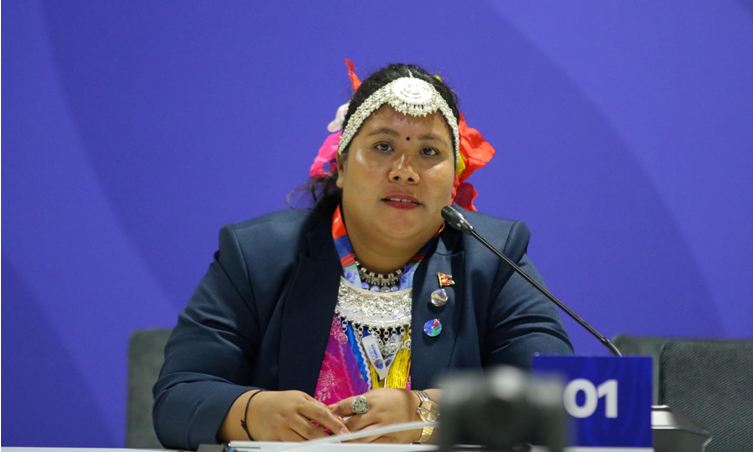
Antalya (Türkiye), Nov 16: Minister for Agriculture, Forests and Environment, Gita Chaudhary, has said that Nepal's main issues are climate justice, climate finance, and mountain-related matters.
Nepal has raised this issue as a major topic at the UN climate change conference (COP-31) currently ongoing in Antalya, Türkiye.
Minister Chaudhary has been leading the Nepali delegation at the ongoing COP 31 since November 14 after Foreign Minister Shisir Khanal, who led Nepal at the conference, returned home.
She said that Nepal has given priority to the risks in the mountain areas, the damage from the Bhotekoshi flood, access to the loss and damage fund, and grant-based climate finance.
In this context Rastriya Samachar Samiti (RSS) had a conversation with Minister Chaudhary at the conference venue. This is an edited excerpt of the conversation:
How was your experience regarding Nepal's participation, preparation, and achievements at the COP-31 conference?
Climate adaptation, loss and damage, climate finance, climate justice, and mountain issues are priority topics. Nepal's contribution to climate change is negligible. Our goal is to demand fair support.
We are actively showing a strong presence in the programmes, talks, discussions, and meetings at the conference.
What steps have you taken to advance advocacy on Nepal's agenda?
We are having group discussions with ministers, negotiation teams, and conference chairs from different countries. On Saturday, during a bilateral meeting with Australia's Climate and Energy Minister Chris Bowen, who is presiding over COP-31, we raised mountain and ocean issues as priorities.
How do you evaluate the programmes, discussions, talks, meetings, and agreements that have taken place so far?
The important achievement is that the mountain issue has moved forward in the formal agenda process of the conference. The topics related to 'mountains and climate change' have been included in the agenda, incorporating the joint proposal of Nepal and Bhutan as well as the proposal from Kyrgyzstan.
The Loss and Damage Fund has temporarily allocated 21.6 million USD for Nepal. Translating this into concrete decisions and implementation is our priority. During this period, agreements related to climate finance with South Korea and to carbon trading with South Pole have been signed.
How far have the efforts of Nepal and two other countries gone in including the mountain issue in the final decision of COP-31?
Nepal, together with Bhutan and the Kyrgyz Republic, has submitted a joint proposal on November 14 to include issues related to mountains and climate change in the COP-31 cover decision.
Nepal's main goal is to present to the world the climate crises faced by indigenous peoples and local communities in the Himalayan region.
Temperature rise in the mountain region is faster than the global average. Melting glaciers, increased risk of glacial lakes, impact on water sources, and more frequent natural disasters have been observed. Therefore, the specific problems and needs of the mountainous regions should be included in climate adaptation, financial support, and international action plans.
How can the joint proposal contribute to addressing the challenges of mountain region and accessing climate finance?
The scientific assessment of present and future climate change risks in mountain regions, the strengthening of an early warning system, and the enhancement of disaster preparedness and resilience has been stressed.
Similarly, the proposal proposed to accept the limitations of adaptation internationally as for countries with mountain ecosystems, climate change adaption is linked to lives and livelihoods.
It has been proposed to incorporate specific indicators for mountain regions into the Global Goal on Adaptation, the New Collective Quantified Goal on Climate Finance, and multilateral climate funds.
What will be your roles in implementing previous agreements and commitments?
Forging agreements and expressing commitments at international conferences is not sufficient to meet the goals. They must be brought into practice.
Preparations are on to integrate Nepal's accomplishments into national policies, plans, and budgets. Coordination is required among relevant ministries, government agencies, and stakeholders. Climate adaptation, disaster risk reduction, the rehabilitation of affected communities, and the construction of resilient infrastructure must be our key priorities.
Furthermore, it is the government's responsibility to ensure the transparent and effective utilization of any international aid.
What are the government's plans to ensure that the support to be received from the Loss and Damage Fund reaches the communities affected by the Bhotekoshi-Trishuli river system floods?
Some 1,500 people have died in the floods while 5,000 have remained unaccounted for. The disaster resulted in physical damage amounting to hundreds of billions rupees.
The current priorities are to rehabilitee disaster-affected communities and restore their livelihoods. Nepal is preparing a proposal in regard with the support to be received from the Loss and Damage Fund, with an emphasis on national ownership, transparency, and addressing the specific needs of the affected communities. However, the available resources remain insufficient to meet the scale of actual needs.
Priority will be given to supporting affected families in their recovery, rebuilding damaged infrastructure, and implementing progarmmes to restore livelihood and strengthen community resilience.
How likely is Nepal to receive adequate and grant-based climate finance, as it has been demanding?
There is growing international recognition of the need for climate finance. Nepal has consistently called for climate finance to be adequate, predictable, timely and easily accessible.
Since loans would add to the financial burden of climate-vulnerable countries, developed nations must honour their commitments by providing climate finance in the form of grants rather than loans.
What is the objective of Nepal's initiative to bring mountain and ocean issues together?
Mountains and oceans are closely interconnected. Changes in mountain ecosystems have far-reaching consequences for downstream regions and oceans through river systems.
The impacts of rising global temperatures, including glacier melt, changes in river flows and rising sea levels, cannot be addressed in isolation.
Through the concept of 'From Sagarmatha to the Sea', Nepal aims to highlight the interconnectedness of mountains and oceans and bring this issue to the forefront of international discussions.
What does Nepal expect from the ongoing global climate conference- COP31- and how will its outcomes benefit the Nepali people?
From Nepal's perspective, three key issues deserve particular attention at the COP31.
Firstly, cutting carbon emissions is essential to curb the rise in global temperatures. Rising temperatures have heightened Nepal's vulnerability to devastating climate-induced disasters, as demonstrated by the recent events in the Bhotekoshi river area.
Therefore, the conference must deliver concrete commitments to reduce dependence on fossil fuels.Secondly, adequate resources must be mobilized for climate finance and adaptation.
Due to inadequate funding in the Loss and Damage Fund, climate-vulnerable countries like Nepal have yet to receive the support they need.
Developed countries must therefore step up their contributions to climate finance. We also expect progress in expanding financial resources for climate adaptation.]
So far, an agreement has been reached to hold annual dialogues on climate change and mountain-related issues. Another outcome of the negotiations focuses on expanding research and monitoring centres in mountain regions.
We believe these outcomes will strengthen efforts to identify climate risks in mountain regions, formulate evidence-based policies and develop appropriate adaptation plans thereby helping protect vulnerable communities and enhance the resilience of the Nepali people to the impacts of climate change.


